Let's schedule a demo so you can get first-hand experience of how ProjectBase can help you run your operations faster and smarter.
Streamline operations and complete projects within budget
.webp)



Struggling with material waste and budget overruns? Discover how digital procurement helps contractors reduce costs, streamline purchasing, and boost profits without changing your accounting workflow.
In the construction and contracting industry, material waste and budget overruns are not just operational hiccups - they're persistent threats to profitability and business growth. The numbers back this up: industry research consistently finds that up to 30% of all materials delivered to a job site end up as waste, whether through over-ordering, damage, incorrect specification, or poor on-site handling. Separate observational studies of live construction sites put wastage even higher — in the 10–15% range of total material volume — well above the 2.5–5% that quantity surveyors typically budget for. That gap between what's planned and what actually happens on site is where contractor margins quietly disappear.
Cost overruns tell a similar story. A landmark study spanning 20 countries and 70 years of construction data found that roughly 85% of projects run over budget, with an average overrun of 28%. Even large capital projects aren't immune — McKinsey's research on megaprojects has found that a majority face cost overruns exceeding 30%, with schedule delays running just as high. This isn't a "some contractors get unlucky" problem. It's structural, and it hits small and mid-sized interior fit-out, electrical, HVAC, and system integration firms hardest, because they don't have the balance sheet to absorb a bad quarter.
For interior contractors, electrical and HVAC specialists, and system integrators, these challenges can make or break a project. In an industry where margins are already thin, digital procurement has emerged as a game-changing strategy for staying competitive, efficient, and profitable.
Enter ProjectBase — a powerful procurement and construction project management software built specifically for contractors in India. Unlike traditional ERP software that disrupts accounting workflows, ProjectBase integrates seamlessly with Tally, ensuring that your team doesn't have to relearn what they already know. More than just software, ProjectBase is a system that enables automation in construction through smarter purchasing, real-time tracking, and streamlined approvals — all designed to minimize waste and save money.
Contractors typically face a variety of inefficiencies:
These issues don’t just slow down execution; they eat directly into profits. To put that in perspective: net profit margins in trades like HVAC and electrical typically hover in the single digits to low teens even among well-run firms, with plenty of businesses operating at 2–5% net margin. At that level, a single over-ordered material batch or an unbilled NT item can wipe out the profit on an entire job. Digital procurement addresses these bottlenecks by centralizing and automating the entire process, bringing all stakeholders onto a single, intelligent platform.
India's construction sector is projected to reach roughly $1.4 trillion by 2027, but a large share of contractors — particularly small and mid-sized interior, MEP, and specialty firms — are still running procurement on Excel sheets, WhatsApp groups, and paper registers. That fragmentation is precisely where over-purchasing, rate leakage, and unbilled NT work hide. It's also why price-escalation and material cost tracking have become such a visible pain point industry-wide: material costs alone typically account for 50–60% of total project expense, so even small inefficiencies compound fast.

One of the most powerful features of a smart ERP software like ProjectBase is its dashboard, where you can view real-time insights for every ongoing project. Project managers and company leadership can instantly see:
This visibility allows teams to act quickly. If a project is bleeding money, the system helps identify ‘why’ and fast. Instead of discovering problems after they’ve affected your margins, ProjectBase lets you take corrective action while the project is still live.
A commercial interior contractor running five parallel fit-out projects across a city typically only finds out a site is over budget when the monthly MIS report lands — by which point the damage is done. With live cost-variance tracking, the same contractor can see on day 12 of a 30-day project that flooring material spend is already tracking 18% above BOQ, and can renegotiate the next purchase order or flag the client before the project closes in the red — rather than discovering it during final billing reconciliation.
Procurement isn't just about placing orders, it's about placing the right orders at the right price. With a smart construction estimating software like ProjectBase, the site engineer can raise a material indent directly from the field using their mobile. The procurement team is instantly notified, eliminating unnecessary calls and paperwork.
ProjectBase also includes an RFQ (Request for Quotation) feature that simplifies vendor engagement. You can:
Once a PO is generated, ProjectBase flags any price deviations or negative cost variances during internal approvals. Purchase price history is also available for comparison. This ensures that procurement is both strategic and transparent.
An electrical contractor sourcing MCBs, cable trays, and switchgear across multiple vendors can compare quotes for the same SKU across the last six purchases in seconds — instead of relying on a purchase manager's memory of "what we usually pay." For a system integrator buying networking hardware and AV equipment where prices shift with every product cycle, that purchase-price history is the difference between a competitive bid and a job that's underpriced before work even starts.
Once materials arrive at the site, the site engineer can approve and verify quantities within the software. A virtual site warehouse is automatically updated with stock levels, helping the team keep tabs on usage and avoid overstocking. Vendor invoices, delivery challans, and approvals are also tracked in one place, accessible to all relevant departments.
The result? Material waste is minimized, and accountability is maximized.
An HVAC contractor often keeps duct sheet, insulation, and copper piping in a site store that only the storekeeper really understands. Without a virtual warehouse, offcuts and partial rolls quietly get "lost" between sites or re-ordered unnecessarily on the next job. With stock levels updated automatically at the point of delivery and consumption, that same offcut becomes visible inventory the next project manager can actually use — instead of a line item written off as waste.
Billing is another area where contractors lose money due to manual processes and delays. ProjectBase transforms this with automated billing workflows:
All this integrates with Tally, so there's no duplication of effort. What used to take hours or even days now happens in minutes with far fewer errors.
A system integrator who installs and configures equipment mid-project often does extra cabling or hardware runs that fall outside the original scope — the NT items mentioned earlier. Without a documented indent-to-invoice trail, this work either goes unbilled or triggers a billing dispute with the client weeks later. Automated running-bill generation tied directly to approved indents closes that gap, so extra work gets captured and billed in the same cycle it happens, not chased down after the fact.
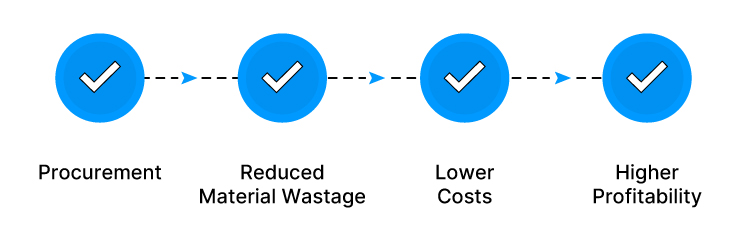
What truly sets ProjectBase apart is its contractor-first design. It doesn’t force your team to abandon their existing systems; it works with them. It brings all departments, site engineers, project managers, and accountants onto one collaborative platform. With features like:
…your team becomes more agile, informed, and productive.
Construction remains one of the most fragmented, tender-price-driven industries when it comes to digital adoption. Surveys of Indian construction firms show a persistent awareness gap — many site teams and even some owners still associate "ERP" purely with accounting software, not project or procurement management, and adoption often stalls not because the technology doesn't work, but because it doesn't fit how site engineers, procurement staff, and accountants already operate day to day. That's exactly the gap ProjectBase is built to close: it layers procurement intelligence on top of the Tally workflows your accounts team already trusts, instead of asking your whole organization to switch systems mid-project.
More than just software, ProjectBase is a system that enables automation in construction through smarter purchasing, real-time tracking, and streamlined approvals — all designed to minimize waste and save money.
Digital procurement isn’t just a technology upgrade; it’s a shift in how contracting companies operate. With ProjectBase, your teams spend less time chasing paperwork and more time executing. Purchases are smarter, errors are fewer, and billing is quicker. All of this adds up to better control over costs, faster revenue recognition, and the ability to take on more projects confidently.
Consider what's at stake: on a mid-sized commercial fit-out or MEP contract where material accounts for over half the project cost, even a 5–10 percentage point reduction in wastage or rate leakage can be the difference between a project that clears a healthy margin and one that barely breaks even. Across an interior contractor's, electrical firm's, HVAC specialist's, or system integrator's full project pipeline, that difference compounds every quarter.
If you’re looking to scale your contracting business while tightening operations, it's time to switch to digital procurement with a construction project management software like ProjectBase. Reduce material waste. Save money. Build better.
See how TechBean Systems, a leading home & building automation integrator in India, replaced outdated Excel-based tracking with ProjectBase to gain real-time visibility, improve project profitability, streamline material tracking, and boost cross-department efficiency.
TechBean Systems Boosts Control & Visibility with ProjectBase


Digital procurement helps contractors track materials in real-time, avoid over-ordering, and ensure accurate deliveries to the site. With tools like material indents, stock visibility, and vendor tracking, waste is minimized significantly.
Inefficient procurement often leads to over-purchasing, price mismatches, delays in material delivery, and billing issues. These problems directly affect profitability by increasing costs and reducing revenue recognition speed.
Common challenges include: 1. Ordering incorrect or excess materials 2. Lack of real-time stock visibility 3. Delayed communication between site and office 4. No centralized tracking of vendor rates and invoices 5. Manual billing errors and revenue loss
Companies can reduce waste by implementing digital systems that track indenting, delivery, and stock usage in real-time. Software like construction procurement tools provide dashboards and alerts that help teams avoid duplicate orders and monitor material consumption.
Automation eliminates repetitive tasks like compiling annexures, reconciling quantities, and generating invoices. Contractors using digital tools can cut billing time from hours to minutes, reduce errors, and ensure faster cash flow.
Yes. Some solutions, like ProjectBase, are built to integrate seamlessly with Tally, ensuring that accounting teams don’t have to change their workflow or duplicate entries.
With tighter margins and growing competition, digital procurement is no longer optional. It improves cost tracking, reduces material waste, accelerates billing, and gives better visibility across departments—helping contractors stay profitable and scalable.
With India's construction economy scaling rapidly toward $1.4 trillion by 2027, manual workflows like paper registers cannot scale efficiently. Because a massive share of specialty and MEP firms still use unlinked tracking methods, digitizing procurement is the single fastest way to protect trade margins against price escalation.
Let's schedule a demo so you can get first-hand experience of how ProjectBase can help you run your operations faster and smarter.


.svg)
